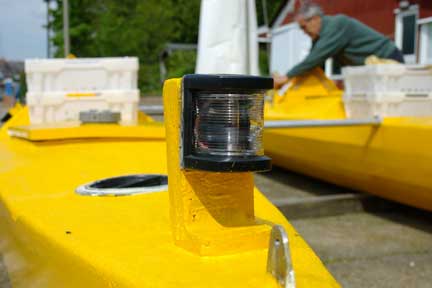
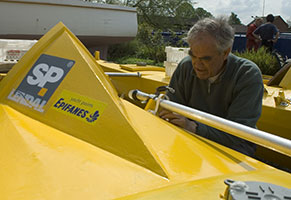
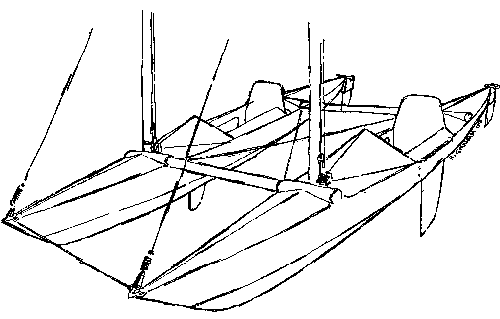
above: artists rendition of the canoe design; below: the final design
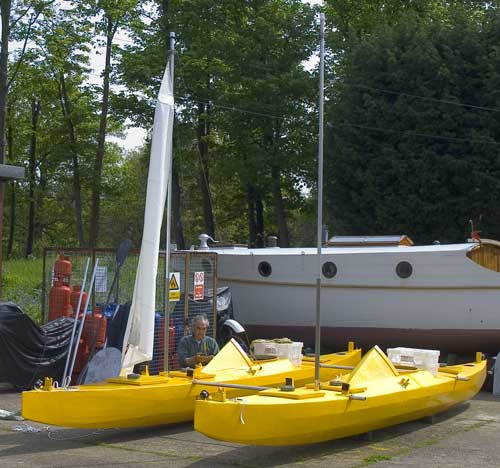
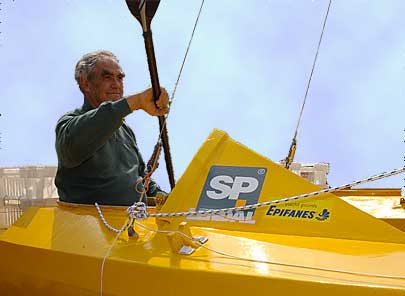
The canoes have been designed to be both river and ocean going and are remarkably adaptable. They can be used both individually, with or without outriggers, or joined to form a catamaran as is shown.
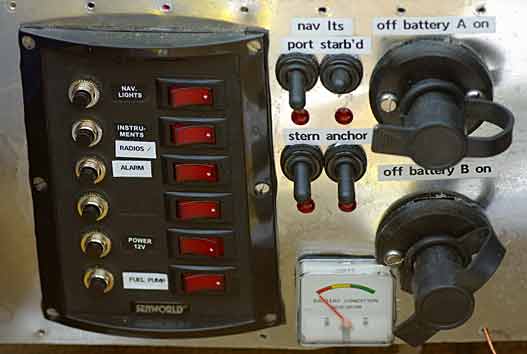
Each will carry paddles and sails as the principle form of propulsion, and a small outboard motor for emergencies. Each will also be equipped with an electrical system using solar cells and batteries to power navigation lights and other equipment, and incorporates a cross-plugging facility to allow the sharing of the electrical system when in catamaran mode. They include a sleeping section for use on the sea crossings, waterproof hoods and cagouls. Each will be provided with water, food, medicines and camping equipment and be able to maneuver independently of the other.
Each canoe is 7.5m long with a beam of 900mm and a draft of 750mm, and each weights 1.5 tonnes, if fully laden. They are constructed of Corecell, overlaid with a mat of Aramid and carbon fibre, glued together with epoxy resin.
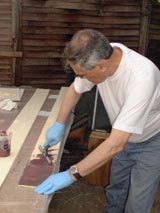
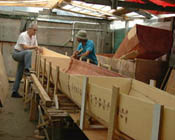
The canoes were first 'formed' using thick corrugated cardboard and the Corecell hull 'planks' and bulkheads fitted. Each component of the hulls was coated with microballoons in epoxy, to block the porosity of the corecell. The two canoes were built in sections, the middle first followed by bow then stern. Once all the sections of each canoe were completed they were glued together to form the separate hulls. The hulls are covered inside and out in aramid and carbon fibre matting.
The expedition will be re-equipped from year to year in accordance with the requirements of the next leg of the journey to be undertaken.